NATO Ankara Summit: Possible Priorities and the Path Towards a New Alliance Development Model
Gustavs Pagrabs
Published: 06.07.2026
Image generated using ChatGPT
The European security environment has entered a significant period of transformation. More than four years since Russia’s full-scale invasion of Ukraine and the intensified discussions on the need for NATO members to take greater responsibility for their own security during the second term of U.S. President Donald Trump have contributed to broad changes taking place at the national, as well as international and regional organization levels. Alongside discussions on strengthening NATO’s collective defense and ensuring a fairer distribution of security responsibilities, the intensity of Russia’s coordinated psychological information operations and intentionally redirected Ukrainian drones towards Latvia, the other Baltic states and NATO’s Eastern Flank has also continued to increase. As a result, the Euro-Atlantic community is forced not only to get acquainted with and adapt to the latest forms of warfare, but also to strengthen NATO’s future framework for cooperation.
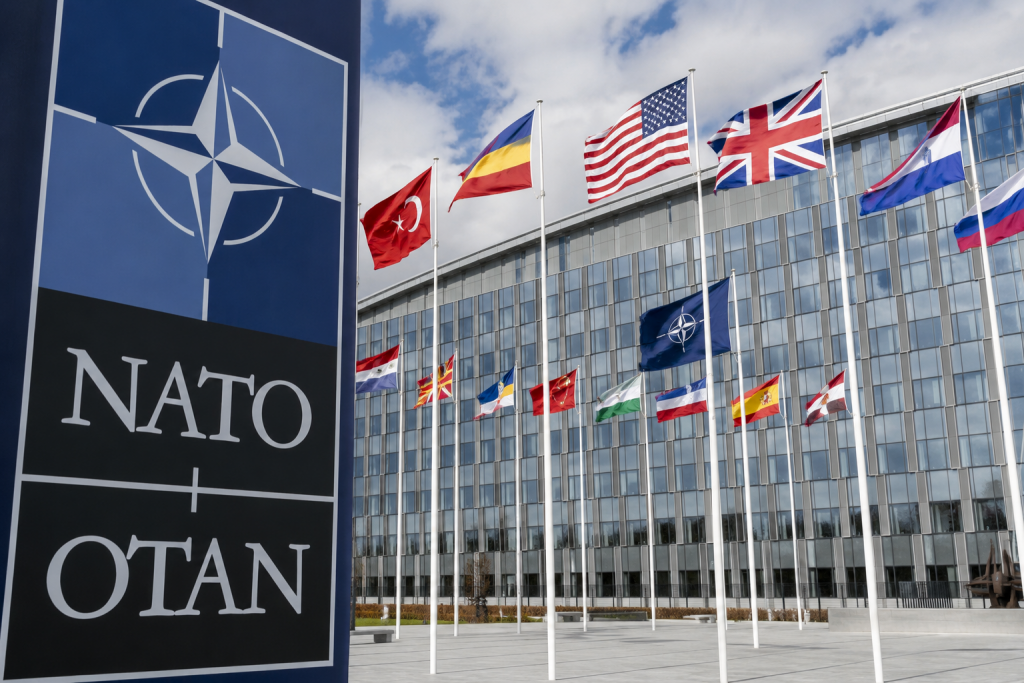
In this context, the upcoming NATO Summit in Ankara, Türkiye, on July 7 and 8, takes on particular significance. Its agenda will be largely shaped by the previous NATO Summit held in The Hague in 2025, which marked an important phase of the Alliance’s adaptation to the new European and Euro-Atlantic security reality. During that summit, the Alliance’s member states committed themselves to gradually work towards the possibility of allocating 5% of their national GDP to defense and defense-related expenditures by 2035, thereby ensuring not only each member state’s individual, but also the entire organization’s collective military readiness.[1] Thus, the Hague Summit serves as a fundamental basis not only for the gradual expansion of NATO’s financial resources, which is clearly evident in Latvia’s commitment to increase defense spending to at least 5% of projected GDP from next year[2], but also for the need to further ensure the practical use of the provided resources.
At the same time, the selection of Ankara as the venue for this year’s NATO summit is not accidental. It reflects Türkiye’s special role within the Alliance. Although Türkiye is not amongst the twelve founding countries of NATO, together with Greece in 1952, it became one of the first countries to join the Alliance since its establishment, becoming one of NATO’s longest-standing member states.[3] Türkiye’s geographical location within NATO is also very important, as it is located not only between Europe and Asia, but also adjacent to the Black Sea and its main sea routes, as well as the Caucasus and the Middle East regions, forming a strategic connection point in Southeastern Europe. In addition, Türkiye, with more than 3000 companies, has become an important defense industry center, serving as a valuable example for the further development and more efficient organization of the defense industry of other NATO member states.[4] Thus, the upcoming summit in Ankara symbolically emphasizes an expanded range of opportunities for closer unity within the Alliance, the exchange of good practices and the further development of military capabilities.
Taking into account the decision adopted during the Hague Summit to gradually expand NATO’s financial resources and consequently the necessity of transforming these resources into real Alliance defense capabilities, several central topics can be identified that will be highlighted on the agenda of the upcoming NATO Summit in Ankara. These central topics are expected to encompass aspects such as the implementation of the increased defense spending commitments agreed upon at the Hague Summit, the necessity for the development of NATO’s defense industry, as well as the continued strengthening of support for Ukraine.[5] In this regard, the Ankara Summit is likely to become a significant platform for advancing these priorities.
Firstly, addressing the expected topic on implementing the defense spending commitments established in The Hague, it must be noted that the reaffirmation of this goal will not be the central issue discussed in the Ankara summit. Instead, a much more important issue will be raised – the ability of NATO member states to accelerate the practical implementation of the defense spending commitments they have undertaken, where countries such as Poland, Lithuania and also Latvia, as leaders in defense spending in relation to GDP [6], can serve as examples for other Alliance members to accelerate their defense spending allocation. Thus, within the framework of the upcoming Ankara summit, attention will be focused not so much on revising the agreed spending target as on creating a common political impulse for a faster and more coordinated implementation of the already undertaken financial commitment, accelerating NATO’s collective progress towards achieving the 5% target set in The Hague, as well as potentially reducing the more cautious approach adopted by certain member states, such as Spain [7], to fulfilling these commitments.
Secondly, the further implementation of the Hague commitment naturally leads to the next potential central topic of the Ankara Summit – the need for the development of the Alliance’s defense industry. Although the amount of defense spending in NATO member states is gradually increasing, the existing defense industry of the Alliance’s member states is unable to expand at the same pace, creating one of the Alliance’s most significant structural challenges throughout all its territory.[8] As a result, a situation has emerged in which the financial resources of the member states continue to grow, but the proportional level of their military capabilities and readiness remains largely unchanged. In this context, the need for the development of the defense industry, which includes not only increased military production capacity but also closer cooperation between NATO member states, at the same time strengthens both the resilience of the member state itself and the Alliance’s overall ability to defend its collective territory. Moreover, given the emergence of drone warfare during the Russia-Ukraine war, it has become increasingly clear that the development of traditional military capabilities alone is no longer sufficient. Therefore, it can be predicted that during the Ankara summit, attention will be focused not only on the further development of NATO’s defense industry, but also on the ability to adapt more quickly to today’s rapidly evolving warfare trends.
Finally, highlighting the importance of strengthening NATO’s defense industry and adapting it to the challenges posed by the newest forms of warfare, it is logical to assess that the topic of further increasing support for Ukraine will remain on the agenda of the NATO Ankara Summit. As Russia’s full-scale invasion of Ukraine continues into its fifth year of active warfare, Ukraine has accumulated a significant range of theoretical and practical knowledge of modern and high-intensity conditions of war. This has not only enabled Ukraine to effectively defend its sovereignty, but also, through strategically successful long-range drone operations targeting Moscow and Russian-occupied Crimea[9], significantly limited Russia’s military and economic capacity, while helping Ukraine regain the initiative on the battlefield against the aggressor. In this context, Ukraine plays the role of an irreplaceable source of experience and knowledge that could serve as an important foundation for NATO’s continued adaptation to the evolving nature of modern warfare. It can therefore be anticipated that, during the Ankara Summit, increased attention will be devoted not only to ensuring closer cooperation with Ukraine, but also to facilitating the exchange of its wartime experience, transferring expertise and further integrating into the enhancement of the Alliance’s collective defense capabilities.
Taken together, these anticipated topics point towards a broader model for NATO’s future development. However, it is here that the current discussion concerning the future role of the U.S. and its possible transformation within the concept of “NATO 3.0” also takes center stage. Although the implementation of this concept envisages a gradual restructuring of the U.S. military presence in Europe to the level of 2022, its core objective ensures a more balanced distribution of responsibilities within NATO, where Europe itself takes the lead in its conventional defense.[10] Thus, such a development should not be interpreted as a weakening of the Alliance, but rather as a strengthening of regional cooperation and the national defense capabilities of member states under the continued guarantee of U.S. nuclear deterrence and an unwavering commitment to NATO’s Article 5 obligations.
Within this context, it is also possible to identify the potential priorities of Latvia, the Baltic States and the wider region at the Ankara Summit. In light of concerns regarding Russia’s possible provocations on NATO’s Eastern flank [11] and the changing nature of modern warfare, the region’s principal priorities are likely to center on the accelerated practical strengthening of the Alliance’s deterrence and defense capabilities, especially in the field of air defense and anti-drone defense. Highlighting the mutual agreement between Latvia and Ukraine on comprehensive cooperation in the field of defense signed on 9 June this year [12], maintaining consistent support for Ukraine at both the Alliance and individual level will remain in the interests of the region. Thus, the Summit is likely to place particular emphasis on strengthening regional cooperation, while further enhancing NATO’s collective defense capabilities, which would at the same time be compatible with the development of the “NATO 3.0” concept.
It may therefore be concluded that the upcoming NATO Summit in Ankara, focusing on three closely interrelated and mutually reinforcing central topics, will mark the future strategic development of the Alliance and lay the foundations for discussions on the necessary adaptation process in the rapidly changing European and Euro-Atlantic security environment. The importance of the Ankara Summit will thus be seen as a practical continuation of the decisions taken in The Hague, where the ability to transform previously approved financial commitments into real defense capabilities will become the main criterion for evaluating the Summit’s success. Overall, the Ankara Summit should therefore be viewed with cautious optimism. It is unlikely to produce immediate changes in the European security architecture; however it has the potential to become a significant step in ensuring NATO’s long-term adaptation process. Although the emergence of the highlighted possible priorities at the NATO Ankara Summit may ultimately differ from the actual agenda on July 7 and 8, the identified directions and current issues within the Alliance still provide a reasonable indication of the expected discussions and decisions that are likely to shape the Alliance in the near future.
[1] North Atlantic Treaty Organization, The Hague Summit Declaration, 25.06.2025, https://www.nato.int/en/about-us/official-texts-and-resources/official-texts/2025/06/25/the-hague-summit-declaration.
[2] Latvijas Republikas Saeima, No nākamā gada aizsardzības finansējumu palielinās līdz 5% no IKP, 26.03.2026, https://www.saeima.lv/aktualitates/saeimas-zinas/35657-no-nakama-gada-aizsardzibas-finansejumu-palielinas-lidz-5-no-ikp.
[3] North Atlantic Treaty Organization, A short history of NATO, 18.06.2026, https://www.nato.int/en/about-us/nato-history/a-short-history-of-nato.
[4] North Atlantic Treaty Organization, Press conference, 22.05.2026, https://www.nato.int/en/news-and-events/events/transcripts/2026/05/22/press-conference-by-nato-secretary-general-mark-rutte?selectedLocale=.
[5] North Atlantic Treaty Organization, Doorstep, 22.05.2026, https://www.nato.int/en/news-and-events/events/transcripts/2026/05/22/doorstep-by-nato-secretary-general-mark-rutte?selectedLocale=.
[6] Atlantic Council, NATO defense spending tracker, 09.04.2026, https://www.atlanticcouncil.org/commentary/trackers-and-data-visualizations/nato-defense-spending-tracker/.
[7] Atlantic Council, NATO defense spending tracker, 09.04.2026, https://www.atlanticcouncil.org/commentary/trackers-and-data-visualizations/nato-defense-spending-tracker/.
[8] North Atlantic Treaty Organization, Opening remarks, 22.05.2026, https://www.nato.int/en/news-and-events/events/transcripts/2026/05/22/opening-remarks-by-nato-secretary-general-mark-rutte?selectedLocale=.
[9] Ķezberis, Vanags, Markusa un Šukurovs, Ukrainas lidroboti uzbrukuši dzelzceļa tiltam pār Ziemeļkrimas kanālu, LSM, 18.06.2026, https://www.lsm.lv/raksts/zinas/arzemes/18.06.2026-ukrainas-lidroboti-uzbrukusi-dzelzcela-tiltam-par-ziemelkrimas-kanalu.a651968/.
[10] Pete Hegseth, Remarks by Secretary of War Pete Hegseth at the 2026 NATO Defense Ministerial in Brussels (As Delivered), US Departament of War, 18.06.2026, https://www.war.gov/News/Transcripts/Transcript/Article/4521023/remarks-by-secretary-of-war-pete-hegseth-at-the-2026-nato-defense-ministerial-i/.
[11] Paula Koškina, NATO austrumu flangā pieaug bažas par iespējamām Krievijas provokācijām, LSM, 28.06.2026, https://www.lsm.lv/raksts/zinas/arzemes/28.06.2026-nato-austrumu-flanga-pieaug-bazas-par-iespejamam-krievijas-provokacijam.a653003/.
[12] Gints Amoliņš, Latvija ar Ukrainu vienojas par sadarbību aizsardzības jomā, pārņems Ukrainas pieredzi cīņā pret droniem, LSM, 09.06.2026, https://www.lsm.lv/raksts/zinas/latvija/09.06.2026-latvija-ar-ukrainu-vienojas-par-sadarbibu-aizsardzibas-joma-parnems-ukrainas-pieredzi-cina-pret-droniem.a650806/.